

Buy New
$46.71$46.71
FREE delivery October 27 - November 3
Ships from: BuyWorldwide Sold by: BuyWorldwide
Used - Good
$11.19$11.19
$3.99 delivery Wednesday, October 21
Ships from: HPB-Red Sold by: HPB-Red
Download the free Kindle app and start reading Kindle books instantly on your smartphone, tablet, or computer - no Kindle device required.
Read instantly on your browser with Kindle for Web.
Using your mobile phone camera - scan the code below and download the Kindle app.

Follow the authors
OK
Grokking Algorithms: An Illustrated Guide for Programmers and Other Curious People
Purchase options and add-ons
Grokking Algorithms is a fully illustrated, friendly guide that teaches you how to apply common algorithms to the practical problems you face every day as a programmer. You'll start with sorting and searching and, as you build up your skills in thinking algorithmically, you'll tackle more complex concerns such as data compression and artificial intelligence. Each carefully presented example includes helpful diagrams and fully annotated code samples in Python.
Learning about algorithms doesn't have to be boring! Get a sneak peek at the fun, illustrated, and friendly examples you'll find in Grokking Algorithms on Manning Publications' YouTube channel.
Continue your journey into the world of algorithms with Algorithms in Motion, a practical, hands-on video course available exclusively at Manning.com (www.manning.com/livevideo/algorithms-in-motion).
Purchase of the print book includes a free eBook in PDF, Kindle, and ePub formats from Manning Publications.
About the Technology
An algorithm is nothing more than a step-by-step procedure for solving a problem. The algorithms you'll use most often as a programmer have already been discovered, tested, and proven. If you want to understand them but refuse to slog through dense multipage proofs, this is the book for you. This fully illustrated and engaging guide makes it easy to learn how to use the most important algorithms effectively in your own programs.
About the Book
Grokking Algorithms is a friendly take on this core computer science topic. In it, you'll learn how to apply common algorithms to the practical programming problems you face every day. You'll start with tasks like sorting and searching. As you build up your skills, you'll tackle more complex problems like data compression and artificial intelligence. Each carefully presented example includes helpful diagrams and fully annotated code samples in Python. By the end of this book, you will have mastered widely applicable algorithms as well as how and when to use them.
What's Inside
- Covers search, sort, and graph algorithms
- Over 400 pictures with detailed walkthroughs
- Performance trade-offs between algorithms
- Python-based code samples
About the Reader
This easy-to-read, picture-heavy introduction is suitable for self-taught programmers, engineers, or anyone who wants to brush up on algorithms.
About the Author
Aditya Bhargava is a Software Engineer with a dual background in Computer Science and Fine Arts. He blogs on programming at adit.io.
Table of Contents
- Introduction to algorithms
- Selection sort
- Recursion
- Quicksort
- Hash tables
- Breadth-first search
- Dijkstra's algorithm
- Greedy algorithms
- Dynamic programming
- K-nearest neighbors.
- ISBN-101617292230
- ISBN-13978-1617292231
- EditionFirst Edition
- PublisherManning
- Publication dateMay 1, 2016
- LanguageEnglish
- Dimensions7.38 x 0.6 x 9.25 inches
- Print length256 pages
There is a newer edition of this item:
Frequently bought together

Customers who viewed this item also viewed
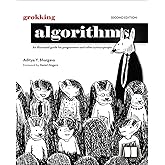
- Grokking Algorithms, Second Edition: An illustrated guide for programmers and other curious peoplePaperbackFREE ShippingGet it Oct 27 - Nov 3Usually ships within 5 to 6 days
- Cracking the Coding Interview: 189 Programming Questions and SolutionsPaperbackFREE Shipping on orders over $35 shipped by AmazonGet it as soon as Sunday, Oct 18
- Python Crash Course, 3rd Edition: A Hands-On, Project-Based Introduction to ProgrammingPaperbackFREE Shipping on orders over $35 shipped by AmazonGet it as soon as Sunday, Oct 18
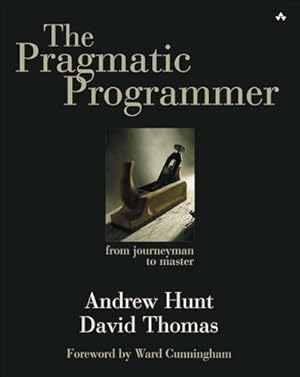
- The Pragmatic Programmer: Your Journey To Mastery, 20th Anniversary Edition (2nd Edition)David ThomasHardcoverFREE Shipping by AmazonGet it as soon as Sunday, Oct 18
- A Common-Sense Guide to Data Structures and Algorithms, Second Edition: Level Up Your Core Programming SkillsPaperbackFREE Shipping by AmazonGet it as soon as Sunday, Oct 18
- Designing Data-Intensive Applications: The Big Ideas Behind Reliable, Scalable, and Maintainable SystemsPaperbackFREE Shipping by AmazonGet it as soon as Sunday, Oct 18
Customers also bought or read
- Cracking the Coding Interview: 189 Programming Questions and Solutions#1 Best SellerData Structure and Algorithms
Paperback$25.79$25.79Delivery Sun, Oct 18 - Operating Systems: Three Easy Pieces#1 Best SellerComputer Operating Systems Theory
Paperback$28.27$28.27Delivery Sun, Oct 18 - A Common-Sense Guide to Data Structures and Algorithms, Second Edition: Level Up Your Core Programming Skills
Paperback$40.00$40.00FREE delivery Sun, Oct 18 - Code: The Hidden Language of Computer Hardware and Software#1 Best SellerMicrosoft Programming
Paperback$32.58$32.58Delivery Sun, Oct 18 - Think Like a Programmer: An Introduction to Creative Problem Solving
Paperback$30.63$30.63Delivery Tue, Oct 20 - The Pragmatic Programmer: Your Journey To Mastery, 20th Anniversary Edition (2nd Edition)
Hardcover$45.97$45.97FREE delivery Sun, Oct 18 - Design Patterns: Elements of Reusable Object-Oriented Software
Hardcover$23.86$23.86Delivery Oct 30 - Nov 6 - The Algorithm Design Manual (Texts in Computer Science)
Hardcover$48.64$48.64FREE delivery Sun, Oct 18 - Grokking Algorithms, Second Edition: An illustrated guide for programmers and other curious people
Paperback$37.81$37.81FREE delivery Oct 27 - Nov 3 - Structure and Interpretation of Computer Programs - 2nd Edition (MIT Electrical Engineering and Computer Science)
Paperback$57.20$57.20FREE delivery Sun, Oct 18 - Algorithms to Live By: The Computer Science of Human Decisions
Paperback$9.64$9.64Delivery Sun, Oct 18 - C Programming Language, 2nd Edition#1 Best SellerC Programming Language
Paperback$59.46$59.46FREE delivery Sun, Oct 18 - Python Crash Course, 2nd Edition: A Hands-On, Project-Based Introduction to Programming
Paperback$23.83$23.83Delivery Tue, Oct 20 - Elements of Programming Interviews in Python: The Insiders' Guide
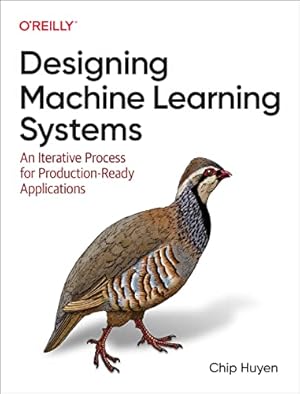
Paperback$38.89$38.89FREE delivery Sun, Oct 18 - Designing Machine Learning Systems: An Iterative Process for Production-Ready Applications
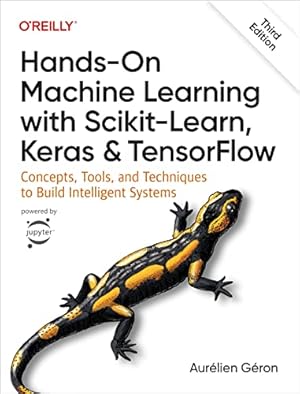
Paperback$40.00$40.00FREE delivery Sun, Oct 18 - Hands-On Machine Learning with Scikit-Learn, Keras, and TensorFlow: Concepts, Tools, and Techniques to Build Intelligent Systems
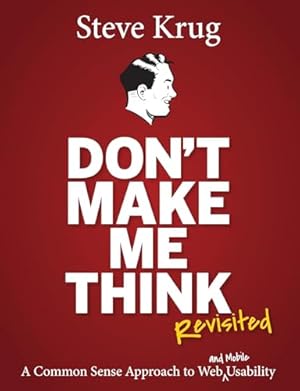
Paperback$49.50$49.50FREE delivery Sun, Oct 18 - Don't Make Me Think, Revisited: A Common Sense Approach to Web Usability (3rd Edition) (Voices That Matter)
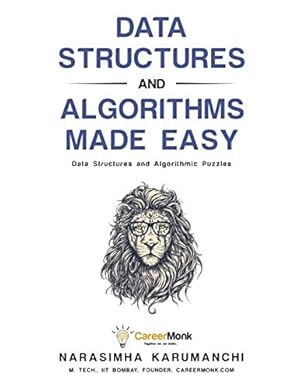
Paperback$21.46$21.46Delivery Sun, Oct 18 - Data Structures and Algorithms Made Easy: Data Structures and Algorithmic Puzzles
Paperback$29.41$29.41Delivery Sun, Oct 18 - A Philosophy of Software Design, 2nd Edition#1 Best SellerComputer Systems Analysis & Design
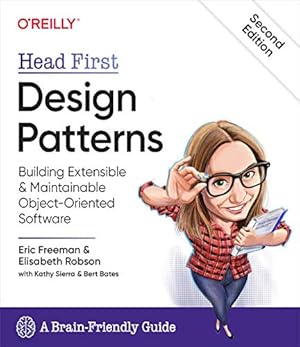
Paperback$21.91$21.91Delivery Sun, Oct 18 - Head First Design Patterns: Building Extensible and Maintainable Object-Oriented Software 2nd Edition#1 Best SellerJava Programming
Paperback$30.68$30.68Delivery Sun, Oct 18 - Go Programming Language, The (Addison-Wesley Professional Computing Series)
Paperback$16.92$16.92$5.99 delivery Oct 23 - 27 - Grokking Simplicity: Taming complex software with functional thinking
Paperback$49.99$49.99FREE delivery Sun, Oct 18 - SQL for Data Analysis: Advanced Techniques for Transforming Data into Insights
Paperback$36.49$36.49FREE delivery Sun, Oct 18
From the Publisher
About this Book
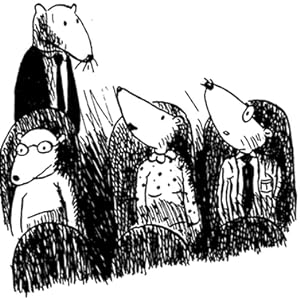
This book is designed to be easy to follow. I avoid big leaps of thought. Any time a new concept is introduced, I explain it right away or tell you when I’ll explain it. Core concepts are reinforced with exercises and multiple explanations so that you can check your assumptions and make sure you’re following along.
I lead with examples. Instead of writing symbol soup, my goal is to make it easy for you to visualize these concepts. I also think we learn best by being able to recall something we already know, and examples make recall easier. So when you’re trying to remember the difference between arrays and linked lists (explained in chapter 2), you can just think about getting seated for a movie. Also, at the risk of stating the obvious, I’m a visual learner. This book is chock-full of images.
The contents of the book are carefully curated. There’s no need to write a book that covers every sorting algorithm—that’s why we have Wikipedia and Khan Academy. All the algorithms I’ve included are practical. I’ve found them useful in my job as a software engineer, and they provide a good foundation for more complex topics. Happy reading!
This book is aimed at anyone who knows the basics of coding and wants to understand algorithms. Maybe you already have a coding problem and are trying to find an algorithmic solution. Or maybe you want to understand what algorithms are useful for.
Who Should Read This Book
- Hobbyist coders
- Coding boot camp students
- Computer science grads looking for a refresher
- Physics/math/other grads who are interested in programming
Grokking Algorithms
|
Grokking Deep Learning
|
|
|---|---|---|
| Customer Reviews |
4.6 out of 5 stars 1,559
|
4.2 out of 5 stars 175
|
| Price | $46.71$46.71 | $32.32$32.32 |
| no data | no data |
Editorial Reviews
About the Author
Product details
- Publisher : Manning
- Publication date : May 1, 2016
- Edition : First Edition
- Language : English
- Print length : 256 pages
- ISBN-10 : 1617292230
- ISBN-13 : 978-1617292231
- Item Weight : 14.1 ounces
- Dimensions : 7.38 x 0.6 x 9.25 inches
- Best Sellers Rank: #382,212 in Books (See Top 100 in Books)
- #23 in Machine Theory (Books)
- #37 in Programming Algorithms
- #64 in Computer Algorithms
- Customer Reviews:
About the authors

TalkPython interviewed me about Grokking Algorithms! Listen here: https://talkpython.fm/episodes/show/82/grokking-algorithms-in-python
I've been drawing and programming for the last two decades, and enjoy both very much. I started coding by making video games in Basic and ActionScript, and I sold my first game at age 14. After getting my MS from UChicago, I've been working at startups that align with my interests: books (Scribd) and art (Etsy). I'm currently a Staff Engineer at Etsy, where I help our sellers sell more goods.
I have been teaching for the last seven years. I started by teaching the Intro to Python class at Noisebridge. Over the years, I have tried to understand how to break down hard concepts so that they are easy to learn. My first book, Grokking Algorithms, came out in 2016. I blog at adit.io and tweet at @_egonschiele.

Dr. Daniel Zingaro is an associate teaching professor of computer science and award-winning teacher at the University of Toronto. His main area of research is computer science education, where he studies how to improve Computer Science teaching and learning.
He has written books on competitive programming, algorithms, Python, and GitHub Copilot and ChatGPT. So, in his professional life he has convinced people that he knows what he's doing -- but his choice of hobbies leads people to question his overall intelligence (see, for example, his skydiving video on YouTube).
Customer reviews
Customer Reviews, including Product Star Ratings help customers to learn more about the product and decide whether it is the right product for them.
To calculate the overall star rating and percentage breakdown by star, we don’t use a simple average. Instead, our system considers things like how recent a review is and if the reviewer bought the item on Amazon. It also analyzed reviews to verify trustworthiness.
Learn more how customers reviews work on AmazonCustomers say
Generated from the text of customer reviewsSelect to learn more
Reviews with images
This made me a believer
Top reviews from the United States
- 5 out of 5 stars
Honestly, this is one of the best CS books I've seen. I'd recommend this to everyone.
Reviewed in the United States on October 28, 2018I'm gonna keep this short (EDIT: that..definitely didn't end up happening) because I haven't gone through the whole book yet, so **disclaimer** on that part. But after just the first couple of chapters, I was very impressed.
I'm a 'seasoned' programmer, I would like to think (industry experience at a “top” company, CS degree, coding all my life, etc), and so almost all of this book is "review" for me. I'm going back through fundamentals in preparation for coding interviews, as I'm back on the market for a job. I'd say this book does these things very well:
1) Fills in the gaps that might've always been there - What I mean by this is, if you maybe got a bachelors in computer science, there could easily have been some material that just didn't completely sink in or that your curriculum didn't focus on. I think going through this book is a great way to make sure those gaps are filled.
2) Explains concepts in an easy to grasp form - The examples that are used in the book are great. There's one example early on with big O involving drawing 16 boxes on a piece of paper. One way is to draw 16 boxes one at a time - yielding O(n). Another way is to fold that piece of paper in half each time. This gets your 16 boxes in only 4 folds - big O(log n). It's simple, yet a great way of showing the difference in the two.
3) Keeps your attention - I love to buy books and then not read them… it’s a talent that I exercise often… One thing I can say about this book is that it actually keeps my attention, and I enjoy reading it. That’s saying a lot if it can do that. How much good is a book if it’s too boring to focus on and get through? If you don’t read it, it doesn’t matter how quality the content is.
I’ve recommended this book to several people in my life already, and I wish I still had my Amazon affiliate account setup because I feel like a freaking spokesperson for the thing..! Haha.
In summary: I would recommend this book to a very wide range of people—ANYONE in computer science looking to get a job, anyone trying to get a degree or just take anything CS related, anyone interested in some of the CS fundamentals, anyone looking to review computer science concepts, anyone wanting to dip their feet into a new field of study they haven’t explored before.
I wish I had this book when I was an undergrad—It would’ve saved me so much headache and difficulty.
I’ll update this review once I’ve finished more of the book, but from what I’ve gone through so far, and compared to plenty of other programming books (algorithms, interview prep books, etc), it’s by far my favorite.
35 people found this helpfulSending feedback...Sending feedback...HelpfulThank you for your feedback.Sorry, we failed to record your vote. Please try againThanks, we'll investigate in the next few days.Sorry, We failed to report this review. Please try againWe'll check if this review meets our community guidelinesOpens in a new tab. If it doesn't, we'll remove it.
CancelReport - 5 out of 5 stars
Good introduction to the topic
Reviewed in the United States on June 12, 2016An excellent introductory text.. While it won't replace formal, traditional, approaches to the subject this is near perfect if you're looking for a quick overview covering key algorithms, Big-O notation and its implications for various approaches, low-math and minimal jargon, and a bit of fun. The illustrations and diagrams are hand-drawn and well-suited to the content style (as well as being clear and simple to follow). If you're looking for a formal introduction or an academic approach this isn't the book for you but it gets the job done as a solid introductory text. I try to keep up with books on a variety of CS/Dev subjects both for myself and to check out new texts for others; this one I'll be highly recommending.
Let's hope the author keeps this up with a "Grokking" series covering other CS/Dev topics.
BTW, the book includes an insert with a code for a free e-book version. I overlooked that on first reading; it's a nice addition if you want to add a portable electronic copy for quick reference.
18 people found this helpfulSending feedback...Sending feedback...HelpfulThank you for your feedback.Sorry, we failed to record your vote. Please try againThanks, we'll investigate in the next few days.Sorry, We failed to report this review. Please try againWe'll check if this review meets our community guidelinesOpens in a new tab. If it doesn't, we'll remove it.
CancelReport - 5 out of 5 stars
A great read
Reviewed in the United States on November 27, 2018An amazing book for non-programmers interested in learning about the world of computer science. The book might also be very useful for undergrads entering the field.
The author starts with providing a general introduction on the concepts of algorithms and analyzing their time using Big O notation. The book gradually advances the reader into various concepts in algorithms to paint a clear picture throughout the book:
- A few necessary data structures.
- A few algorithm implementations for sorting, searching and finding the shortest path.
- Graph algorithms for modeling networks.
- K-NN as a gentle intro to classification problems and machine learning.
The book introduces the main methods for problem-solving techniques including:
- Divide and conquer: breaking a problem into smaller pieces
- Approximation algorithms and NP-complete problems: greedy algorithms are used when calculating the exact solution will take too much time
- Dynamic programming: optimizing a solution given a constrain by breaking it up into subproblems and solving these subproblems first (knapsack problem)
Finally, the author wraps up by introducing the reader to concepts from various branches of computer science. The author provides hints on learning about each of these topics moving forwards:
- Binary Trees for: B-trees, red-black trees, heaps, and splay trees.
- Inverted Indexes: building search engines
- Fourier transform: decomposing signals into the frequencies that make it up.
- Parallel algorithms: mapReduce.
- HyperLogLog and Bloom filters: probabilistic data structures and algorithms.
- SHA functions: encryption and data integrity.
- locality-sensitive hashing: Simhash functions where small changes only change the output slightly.
- Diffie-Hellman key exchange: public private keys for secure data sharing.
- Linear programming: maximizing a solution given a constraint, Simplex algorithm.
2 people found this helpfulSending feedback...Sending feedback...HelpfulThank you for your feedback.Sorry, we failed to record your vote. Please try againThanks, we'll investigate in the next few days.Sorry, We failed to report this review. Please try againWe'll check if this review meets our community guidelinesOpens in a new tab. If it doesn't, we'll remove it.
CancelReport - 4 out of 5 stars
Great Introduction for Newbies, Good Refresher for Programmers
Reviewed in the United States on December 3, 2019Writing and teaching about algorithms is hard. And books on algorithms tend to cater to one audience, your typical programmer who most likely has a computer science degree and took a semester on Algorithms. And these books fall in to two camps: academicky/theoretical and highly technical for job interviews. The most popular books on algorithms are not beginner friendly.
Grokking Algorithms is the opposite. And caters to an unmet need: newbies and programmers who haven't touched algorithms for a long time.
The book does three things well. One, it has well-drawn and simple pictures and diagrams to explain foundational algorithms such as QuickSort or Binary Search. Two, the explanations for harder algorithms such as Dijkstra's Algorithm, Greedy Algorithms, and Dynamic Programming are excellent. For a programmer who hasn't done algorithms in a long time, the author's explanations were simple, easy-to-understand, and enabled me to remember key ideas from my college days. Three, the organization of the topics enabled me to use previous chapters to understand new algorithms and emphasize key ideas that I learned early in the book. Pro-tip: read this book in order, especially if you're a newbie.
Some negatives: The illustrations are hand-drawn, so sometimes it's hard to understand what the captions or diagrams are showing. If you don't know what an illustration is supposed to say, turn the book and view the illustration from a different angle. Sometimes, the words are written sideways from bottom to top. Also, the book loses focus in chapters 10 and 11. It no longer focuses on algorithms. Instead, the author writes about machine learning, encryption algorithms, and lesser known algorithms. The book could easily have stopped at chapter 9. I honestly think that these chapters were filler chapters. If you're reading this book to prepare for a job interview at a tech company, stop at chapter 9.
7 people found this helpfulSending feedback...Sending feedback...HelpfulThank you for your feedback.Sorry, we failed to record your vote. Please try againThanks, we'll investigate in the next few days.Sorry, We failed to report this review. Please try againWe'll check if this review meets our community guidelinesOpens in a new tab. If it doesn't, we'll remove it.
CancelReport - 5 out of 5 stars
This is a great supplement to any computer science student taking a course ...
Reviewed in the United States on July 24, 2018This is a great supplement to any computer science student taking a course in algorithms. Definitely NOT a substitute for more academic books and instruction on the subject, but definitely a great way to de-mystify what is for many people the hardest part about getting a degree in CS. The section on Dynamic Programming in particular is very helpful as it focuses on the principles and uses drawings to illustrate, and approaches the subject very gradually. It doesn't help (or even mention) things like coming up with or solving for recurrences, and doesn't have much in the way of real code examples, but that's actually a good thing as it helps keep the focus on the ideas rather than the implementation.
I also can't say enough good things about the layout! They were generous with the whitespace, which helps with clarity and focusing on one idea at a time.
Sending feedback...Sending feedback...HelpfulThank you for your feedback.Sorry, we failed to record your vote. Please try againThanks, we'll investigate in the next few days.Sorry, We failed to report this review. Please try againWe'll check if this review meets our community guidelinesOpens in a new tab. If it doesn't, we'll remove it.
CancelReport - 5 out of 5 stars
The best algorithms and data structures book for those without a computer science background.
Reviewed in the United States on July 25, 2016If you are new to data structures and algorithms, I guarantee that you find this book a helpful resource with a single caveat: make sure you are the target audience.
From the author:
"Who should read this book?
This book is aimed at anyone who knows the basics of coding and wants to understand algorithms. Maybe you already have a coding problem and are trying to find an algorithmic solution. Or maybe you want to understand what algorithms are useful for. Here’s a short, incomplete list of people who will probably find this book useful:
• Hobbyist coders
• Coding boot camp students
• Computer science grads looking for a refresher
• Physics/math/other grads who are interested in programming"
In my opinion, the reason this book is so much better than traditional resources on the subject is that the author adheres to a few basic principles that I find fundamental to learning.
From the author:
"About this book
This book is designed to be easy to follow. I avoid big leaps of thought. Any time a new concept is introduced, I explain it right away or tell you when I’ll explain it. Core concepts are reinforced with exercises and multiple explanations so that you can check your assumptions and make sure you’re following along.
I lead with examples. Instead of writing symbol soup, my goal is to make it easy for you to visualize these concepts. I also think we learn best by being able to recall something we already know, and examples make recall easier. So when you’re trying to remember the difference between arrays and linked lists (explained in chapter 2), you can just think about getting seated for a movie. Also, at the risk of stating the obvious, I’m a visual learner. This book is chock-full of images.
The contents of the book are carefully curated. There’s no need to write a book that covers every sorting algorithm—that’s why we have Wikipedia and Khan Academy. All the algorithms I’ve included are practical. I’ve found them useful in my job as a so ware engineer, and they provide a good foundation for more complex topics."
The book starts with simple concrete examples and then moves towards abstraction. Most books on the subject start with abstract mathematical equations (symbol soup as the author calls it) and then move towards concrete implementations (or just stay with abstract proofs). That is approach is completely backwards to me, but perhaps it works well for others.
33 people found this helpfulSending feedback...Sending feedback...HelpfulThank you for your feedback.Sorry, we failed to record your vote. Please try againThanks, we'll investigate in the next few days.Sorry, We failed to report this review. Please try againWe'll check if this review meets our community guidelinesOpens in a new tab. If it doesn't, we'll remove it.
CancelReport - 5 out of 5 stars
Can’t say enough good things about this book
Reviewed in the United States on February 17, 2020I’m a front end dev without any formal computer science education. In the past, when I heard terms related to algorithms and big O notation, they seemed scary and made me feel totally unqualified to be part of that world. But the reality is, a lot of these concepts seem more difficult than they really are. When they’re presented in simple terms with examples and illustrations, you start to realize that it’s not beyond you at all - you just haven’t learned it yet. This book does an incredible job of making these concepts accessible. I recommend it to anyone without a formal CS background, whether you’re new to programming, or like me, have been doing it for a long time but haven’t had much exposure to algorithms. I recently used this book as a resource when preparing for coding interviews, and it was invaluable. I give it a ton of credit for helping me land my current job in a role I didn’t think was possible for me just a few years ago.
22 people found this helpfulSending feedback...Sending feedback...HelpfulThank you for your feedback.Sorry, we failed to record your vote. Please try againThanks, we'll investigate in the next few days.Sorry, We failed to report this review. Please try againWe'll check if this review meets our community guidelinesOpens in a new tab. If it doesn't, we'll remove it.
CancelReport - 5 out of 5 stars
Makes algorithm fun
Reviewed in the United States on August 5, 2022It makes learning algorithm fun. It covers the most popular algorithms and use cute pictures to explain the point. I was borrowing this from my local library a few times and then decided that it's worth the purchase because I keep referring back to it.
I think the hard copy version has a nicer layout that makes it very comfortable to read. I didn't like the e-book version as much.
2 people found this helpfulSending feedback...Sending feedback...HelpfulThank you for your feedback.Sorry, we failed to record your vote. Please try againThanks, we'll investigate in the next few days.Sorry, We failed to report this review. Please try againWe'll check if this review meets our community guidelinesOpens in a new tab. If it doesn't, we'll remove it.
CancelReport
Top reviews from other countries
Russi Greta5 out of 5 starsA must have at any coding level
Reviewed in Italy on April 14, 2022The book just arrived and I’m truly amazed. I’m a python developer with 3 years of experience but in my job I never had the opportunity to get in deep with some algorithmical problems or particular structures (that’s probably one of the downsides of coding in Python, with C++ I would have surely needed to learn these in the early stages). So, I’m preparing for an interview and I already had Cracking the coding interview at home (since years!) but I was never able to really get through it without getting bored and dropout, or feeling I was missing something. I bought Grokking algorithms after a youtube recommendation and I feel like I’ve finally found the golden ticket of my learning strategy. This book looks too easy and maybe naive at the beginning but in the second chapter you start getting a real grasp of concepts that were really un-teached in Cracking the Coding interview or similar books. I think it’s super important to first get the large picture and the answers to “why do I need this?” “why did they invented it in the first place?” and THEN get through the serious implementation. This books does it and I’m happy for the purchase! (Above, a comparison of the two books over the same topic)
5 out of 5 starsA must have at any coding level
Reviewed in Italy on April 14, 2022The book just arrived and I’m truly amazed. I’m a python developer with 3 years of experience but in my job I never had the opportunity to get in deep with some algorithmical problems or particular structures (that’s probably one of the downsides of coding in Python, with C++ I would have surely needed to learn these in the early stages). So, I’m preparing for an interview and I already had Cracking the coding interview at home (since years!) but I was never able to really get through it without getting bored and dropout, or feeling I was missing something. I bought Grokking algorithms after a youtube recommendation and I feel like I’ve finally found the golden ticket of my learning strategy. This book looks too easy and maybe naive at the beginning but in the second chapter you start getting a real grasp of concepts that were really un-teached in Cracking the Coding interview or similar books. I think it’s super important to first get the large picture and the answers to “why do I need this?” “why did they invented it in the first place?” and THEN get through the serious implementation. This books does it and I’m happy for the purchase! (Above, a comparison of the two books over the same topic)
Sending feedback...Thanks, we'll investigate in the next few days.Sorry, We failed to report this review. Please try againWe'll check if this review meets our community guidelinesOpens in a new tab. If it doesn't, we'll remove it.
CancelReport
Masoud Fallahpour5 out of 5 starsGreat book for beginners
Reviewed in Sweden on December 31, 2021Grokking Algorithms does a very good job of providing a gentle introduction to algorithms. This is probably one of the best beginner-friendly books about algorithms you can find out there. But If you are already familiar with the topic then this book adds almost nothing to you because you probably already know all the material presented in the book.
Sending feedback...Thanks, we'll investigate in the next few days.Sorry, We failed to report this review. Please try againWe'll check if this review meets our community guidelinesOpens in a new tab. If it doesn't, we'll remove it.
CancelReport
KaaN5 out of 5 starsExcellent
Reviewed in Turkey on May 6, 2021Excellent
Sending feedback...Thanks, we'll investigate in the next few days.Sorry, We failed to report this review. Please try againWe'll check if this review meets our community guidelinesOpens in a new tab. If it doesn't, we'll remove it.
CancelReport
Sergio D.5 out of 5 starsReally good book
Reviewed in Mexico on August 8, 2022Easy to read, easy to understand and to enjoy. Excellent to brush up or reinforce previous knowledge.
Sending feedback...Thanks, we'll investigate in the next few days.Sorry, We failed to report this review. Please try againWe'll check if this review meets our community guidelinesOpens in a new tab. If it doesn't, we'll remove it.
CancelReport
Roozbeh Valavi5 out of 5 starsExcellent
Reviewed in Australia on April 3, 2025Very nicely written and illustrative. It explains algorithms in graphics and easy to follow explanations and simple Python code.
Sending feedback...Thanks, we'll investigate in the next few days.Sorry, We failed to report this review. Please try againWe'll check if this review meets our community guidelinesOpens in a new tab. If it doesn't, we'll remove it.
CancelReport