
 Mike Gassman


Hardware. One firmware supports three boards: the Freenove FNK0104N (ESP32-S3, ST77922 display over QSPI with built-in touch), the “CYD” ESP32-32E 3.5” (ST7796U with resistive touch) and the Waveshare ESP32-S3-Touch-LCD-3.5 (ST7796 with FT6336 touch, in Waveshare’s own enclosure). The Freenove panel can only draw in portrait, so landscape is rotated in software, strip by strip, before it goes to the screen. The Waveshare has a QMI8658 motion sensor: there’s no snooze bar on that version; you tap the case to snooze, and tap twice to stop.
Software. Alarms, themes and settings live on the clock; the web page, its live preview of the clock screen and the setup hotspot are all served from the ESP32. Sounds are synthesized on the clock (alarm tones and sleep noise), and you can upload your own. Firmware installs from the browser with ESP Web Tools, and later updates come from the clock’s own web page, which checks rouseclock.com for new versions and installs them only when you say so.
Case. Designed in code (Python with the Manifold library), printed in PLA with supports only in two small spots. The name on the bezel is inlaid in a second color, or engraved for single-color printers.
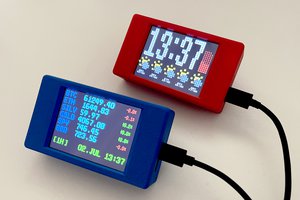
 seizu (emp)
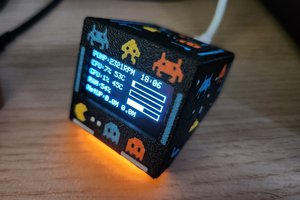
 Keralots

 Mathieu Grenonville
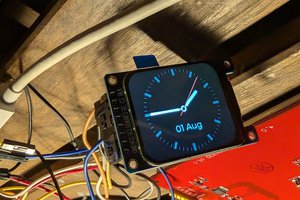
 Tobias Stanzel