
In Focus: Sudan Conflict

Sudan remains in a crisis of staggering proportions, with civilians paying the highest price ... the only way to ensure the protection of civilians is to end this senseless conflict
Sudan is facing one of the most challenging periods in its modern history as the ongoing conflict between the Sudanese Armed Forces (SAF) and the paramilitary Rapid Support Forces (RSF) plunges the nation deeper into turmoil.
The war, which erupted in April 2023, has devastated communities, displaced millions and exacerbated an already dire humanitarian crisis.
The crisis is unfolding against a backdrop of extreme vulnerability, as Sudan remains highly susceptible to the impacts of climate change and disasters.
From severe droughts to deadly floods, the compounded effects of conflict and environmental instability are pushing communities to the brink, leaving them struggling to survive. Famine has already been declared in some parts of the country, further exacerbating the humanitarian crisis and putting millions of lives at immediate risk.
In this In Focus section, UN News collates its comprehensive coverage of the conflict, the far-reaching impacts on the population, and the urgent efforts required to achieve peace and stability in the region.
Stay informed with the latest developments and understand the critical role of the international community in addressing the growing needs of those affected by this conflict.
Statements by the Secretary-General or his spokesperson on Sudan
- Statement attributable to the Spokesperson for the Secretary-General - on Sudan (30 April 2025)
- Secretary-General’s statement on the second anniversary of the Sudanese conflict (14 April 2025)
- Statement attributable to the Spokesperson for the Secretary-General – on Sudan (13 April 2025)
- Statement attributable to the Spokesperson for the Secretary-General – on Sudan (24 February 2025)
- Statement attributable to the Spokesperson for the Secretary-General – on Sudan (27 January 2025)
- Statement attributable to the Spokesperson for the Secretary-General - on Sudan (24 January 2025)
- Statement attributable to the Spokesperson for the Secretary-General – on Sudan (24 December 2024)
- Statement attributable to the Spokesperson of the Secretary-General – on Sudan (20 December 2024)
- Note to Correspondents: Third Consultative Meeting on Sudan Convenes in Nouakchott, Mauritania (18 December 2024)
- Readout of the Secretary-General's phone call with First Lieutenant General Abdel-Fattah Al-Burhan Abdelrahman Al-Burhan, President of the Transitional Sovereign Council of the Republic of the Sudan (25 August 2024)
- Statement attributable to the Spokesperson for the Secretary-General (14 August 2024)
- Statement attributable to the Spokesperson for the Secretary-General (11 August 2024)
- Statement attributable to the Spokesperson for the Secretary-General (6 June 2024)
- Statement attributable to the Spokesperson for the Secretary-General (13 May 2024)
- Secretary-General's Press Encounter on Sudan (15 April 2024)
- Statement attributable to the Spokesperson for the Secretary-General (28 February 2024)
In the midst of Sudan's escalating crisis, the Personal Envoy of the Secretary-General for Sudan plays a crucial role in international efforts to mediate and resolve the conflict. Appointed by the United Nations Secretary-General, this envoy is tasked with facilitating dialogue and supporting peace initiatives on the ground.
Personal Envoy Ramtane Lamamra (Algeria)
UN Secretary-General António Guterres announced on 21 November 2023 the appointment of Ramtane Lamamra of Algeria as his Personal Envoy for Sudan.
Mr. Lamamra brings more than four decades of experience in politics, international affairs and diplomacy. He held several high-level governmental positions in Algeria, including serving as Deputy Prime Minister, Minister of Foreign Affairs and as Minister of State and Diplomatic Adviser to the President. Between 2008 and 2013, he served as the African Union Commissioner for Peace and Security. Since 2017, Mr. Lamamra has been a member of the High-level Advisory Board of the United Nations Secretary-General on Mediation. Between 2018 and 2021, he served as a Member of the African Union High-Level Implementation Panel for Sudan, South Sudan and the Horn of Africa.
A career diplomat, Mr. Lamamra holds extensive knowledge of the Horn of Africa and the wider Middle East and North Africa region, as well as of the work of international and regional organizations. Among other diplomatic postings, he served as Ambassador of Algeria to Portugal, the United States, Austria, Ethiopia and Djibouti, as well as Permanent Representative of Algeria to the United Nations.
Mr. Lamamra holds a diploma from the Diplomatic Section of the Algerian National School of Administration. He is fluent in Arabic, French and English.
The UN Security Council is a key player in addressing the ongoing conflict in Sudan, wielding significant influence through its resolutions aimed at mitigating the crisis and fostering peace.
Resolutions: The Security Council has adopted various resolutions to address the conflict, including demands for ceasefires. These resolutions are designed to apply international pressure on the conflicting parties and promote adherence to peace agreements.
Recent resolutions:
- Resolution 2750 (2024) – 11 September 2024
- Resolution 2736 (2024) – 13 June 2024
- Resolution 2725 (2024) – 8 March 2024
Click here for more
Monitoring and Reporting: The Council receives regular briefings from the Personal Envoy of the Secretary-General for Sudan and other UN bodies. These reports provide detailed updates on the conflict’s dynamics, humanitarian impacts, and the progress of peace negotiations, helping the Council to make informed decisions.
Click here for details on Security Council meetings on Sudan, provided by UN Meetings Coverage.
In response to the escalating conflict in Sudan, various United Nations offices and agencies are actively involved in both humanitarian relief and development efforts. Their roles are crucial in addressing the immediate needs of affected populations and supporting long-term recovery and stability.
- Humanitarian Relief: UN agencies deliver essential aid, including food, water, medical supplies, and shelter, to those impacted by the conflict, especially women, children and other vulnerable groups.
- Emergency Health Services: They provide critical medical care and help address mental health and psychosocial needs.
- Protection and Advocacy: UN entities monitor human rights situation, especially the impacts on those at heightened risk, and advocate for their rights.
- Development Support: Agencies work on rebuilding infrastructure and supporting economic recovery to help communities recover.
- Coordination and Planning: They collaborate with partners to ensure a cohesive response, avoiding duplication and maximizing impact.
Through these multifaceted roles, the UN system is working tirelessly to alleviate the suffering caused by the conflict in Sudan and to support the country’s path toward recovery and stability.
Click here for more information on the UN entities in Sudan.
Click here for more information from Relief Web on the work of the wider humanitarian community in response to the crisis
FEATURED: World must not turn its back on Sudan’s deepening crisis: Guterres
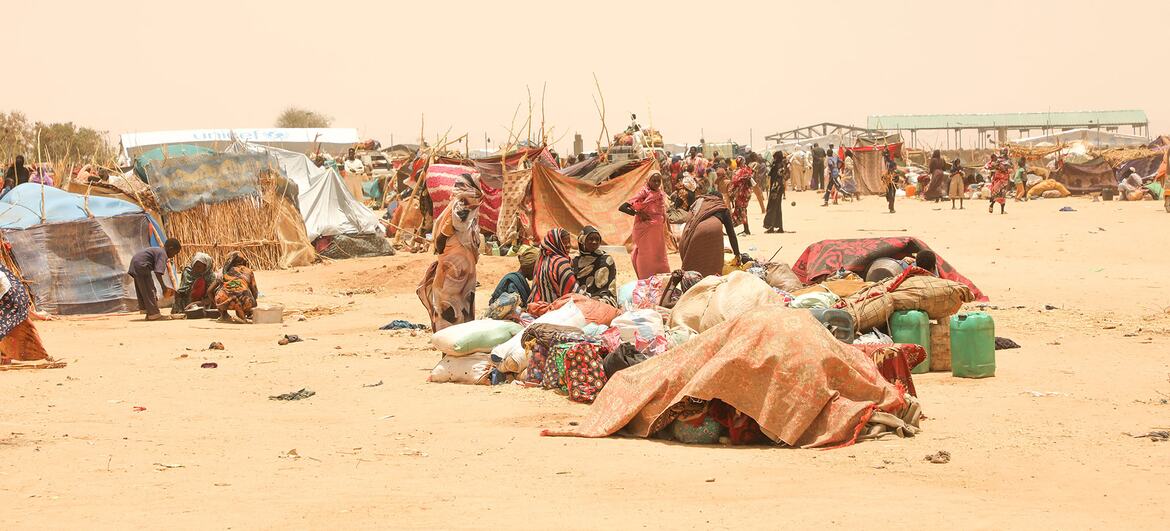
Sudan’s deepening war is driving unprecedented levels of hunger, child malnutrition and displacement, UN agencies report, as new data from Darfur and a renewed refugee influx into Chad underscore the rapidly deteriorating situation.
The war, which erupted in April 2023 between the Sudanese Armed Forces (SAF) and the paramilitary Rapid Support Forces (RSF), has devastated civilian infrastructure, collapsed basic services and triggered one of the world’s largest displacement crises.
A nutrition survey conducted this month in Um Baru locality in Sudan’s North Darfur state – one of the regions worst affected by the fighting – found that more than half of children under five are acutely malnourished.
These are among the highest rates ever recorded in a standardized emergency assessment, the UN Children’s Fund (UNICEF) said, warning that without urgent, unhindered humanitarian access, children face an immediate risk of death from preventable causes.
Millions displaced, health system in ruins as Sudan war fuels famine

More than 12.4 million people have been forced from their homes across Sudan – including over 3.3 million refugees who have fled to neighbouring countries – as two years of civil war fuel famine, disease outbreaks and the collapse of the health system.
Kordofan cannot become ‘another El Fasher,’ UN human rights chief warns
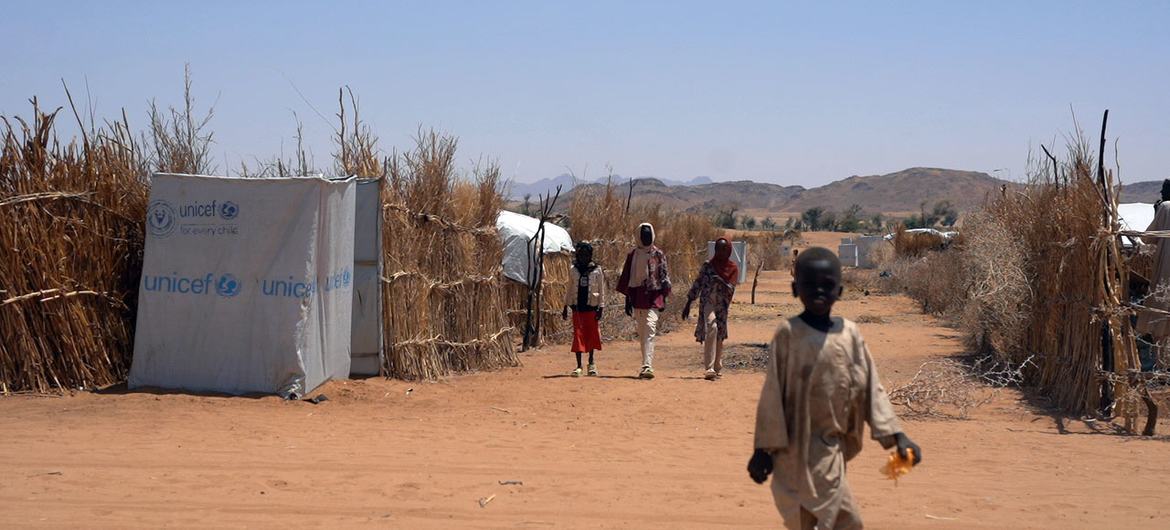
UN human rights chief Volker Türk on Thursday warned that Sudan risks “another El Fasher” as fierce fighting spreads across the Kordofan region, raising fears of a fresh wave of atrocities.