On March 15, President Donald Trump’s administration sent more than 230 Venezuelan immigrants to a maximum-security prison in El Salvador. Without providing evidence, Trump has called the men “some of the most violent savages on the face of the Earth.”
Last week, the men were released as suddenly as they'd been taken away. Now, the truth of all their stories — one by one — will begin to be told.
Starting here.

The Men Trump Deported to a Salvadoran Prison
We’ve compiled a first-of-its-kind, case-by-case accounting of 238 Venezuelan men who were held in El Salvador. To do so, ProPublica, The Texas Tribune and a team of Venezuelan journalists from Alianza Rebelde Investiga (Rebel Alliance Investigates) and Cazadores de Fake News (Fake News Hunters) spent the past four months reporting on the men’s lives and their backgrounds. We obtained government data that included whether they had been convicted of crimes in the U.S. or had pending charges. We found most were listed solely as having immigration violations. We also conducted interviews with relatives of more than 100 of the men; reviewed thousands of pages of court records from the U.S. and South America; and analyzed federal immigration court data. Read more about our methodology.
White House spokesperson Abigail Jackson did not respond to questions about the men in the database but said Trump “is committed to keeping his promises to the American people and removing dangerous criminal and terrorist illegals who pose a threat to the American public.” She referred questions to the Department of Homeland Security, which did not respond.
Search below to learn more about the men.
238 people
Legal Justification for Removal
How the Government Labeled Them
Tattoos
Help Us Report
We are still reporting. Are you or someone you know one among the people who were deported? Do you have information about the deportation operation to share? You can fill out this form or reach our tip line on Signal at 917-512-0201 or WhatsApp at 917-327-4868.

Darwin Gerardo Hernández Carache30 years old
Hernández is a barber who left Venezuela for the U.S. with his brother in May 2023, their mother told us. His goal, like his brother’s, was to work in the U.S. and earn enough money to build a house for his family and start a business back home. His partner and young daughter remain in Venezuela. Hernández attempted to enter the U.S. with his brother that August, but was deported to southern Mexico. He tried again and was successful that October, with an appointment with U.S. border officials made via the CBP One app, which the Biden administration used to try to bring order to the soaring numbers of migrants attempting to enter the country. The brothers lived in Denver and eventually moved to Raleigh, North Carolina, where Hernández worked as a DoorDash delivery driver and as a barber. He and his brother were detained by immigration authorities in February at a party to make a music video, along with a group of other Venezuelan men. His mother said he doesn’t have any tattoos.
U.S. government data we obtained lists Hernández as having pending criminal charges. We could not find related court or police records, and the Trump administration declined to provide information to support the claim. His mother told us she was unaware of any criminal charges filed against her son.
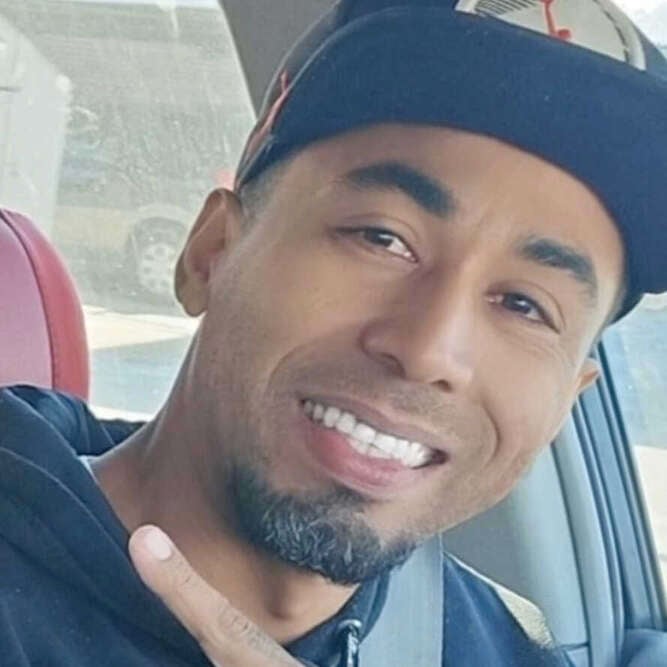
Juan José Ramos Ramos39 years old
Ramos, a father of four, worked providing phone technical assistance and installing security cameras in Venezuela before migrating to the U.S., his mother, Lina Ramos, told us. He migrated to the U.S. and entered in January with an appointment with border officials made via the CBP One app, which the Biden administration used to try to bring order to the soaring numbers of migrants attempting to enter the country. Ramos then went to live with a cousin in Utah. Since he didn’t have a work permit, he often accompanied a cousin, Carlos Ramos, to his job as a security guard, the cousin told us. As they traveled to work one afternoon, immigration officials pulled them over and arrested them. The cousin, who was later released, said that he had a Venezuelan sticker on his car and believes that might be why they were stopped. According to the cousin, both showed documents indicating that they’d been allowed to enter the U.S., but officials detained them anyway. At an Immigration and Customs Enforcement office, officials questioned them and made them undress, according to the cousin. He said he heard the officials asking Ramos about his tattoos. Though the cousin was released that day, Ramos remained detained. The family believes he was held because of his tattoos, which include a rose on his hand and the names and dates of birth of loved ones. It’s unclear if the tattoos played a role in the government labeling him a member of the Tren de Aragua gang. Ramos had a pending asylum application when he was deported and imprisoned, according to our analysis of immigration court data.
He is not flagged as having a criminal conviction or pending charges in U.S. government data we obtained, and we found no related court or police records.
Ramos was featured in our story “Now That They’re Free,” and videos “The Nightmare at CECOT” and “Surviving CECOT.”

Charlie Michelle González Rodríguez23 years old
González hadn’t filed an asylum application or gotten a work permit, so he did odd jobs such as landscaping, shoveling snow or construction, his sister told Univision. He was detained by Immigration and Customs Enforcement in Denver in late January. From detention, he told her he believed he would be deported to Venezuela. His tattoos include an elephant and the names of relatives, although it’s unclear if they played a role in the government labeling him a member of the Tren de Aragua gang. “It’s true it’s a federal crime to be illegally in a county,” his sister told Univision. “But it doesn’t mean you should be sent to that kind of prison and much less without prior warning or without going through a legal process.”
He was flagged as having pending criminal charges in U.S. government data obtained by the news organizations. We found records showing he was arrested in November 2023 on charges of shoplifting less than $300 worth of items from a Walmart in suburban Chicago, where he lived for a time. He pleaded guilty to a misdemeanor retail theft charge. He has several other arrests but the cases were all dismissed.
Robinson Josué Saavedra Caruci28 years old
Little public information is available about Saavedra’s life in Venezuela or how he came to the U.S. Please reach out if you have information to share.
U.S. government data we obtained lists Saavedra as having a conviction for an immigration offense. We found records showing he was charged with illegal reentry when he tried to cross into the U.S. near El Paso, Texas, in 2023. Venezuelan records show he was known by the alias “El Duende,” or “The Goblin,” and was named as an accomplice in a 2012 homicide case in the city of Guanare. The case was later dismissed. In 2018, while he was in jail on aggravated robbery charges in a separate case, articles in the Venezuelan media reported that a man by the same name and age escaped. The outcome of that case is unclear.
Uriel David Marrufo Hernández19 years old
Little public information is available about Marrufo’s life in Venezuela or how he came to the U.S. Please reach out if you have information to share.
He was not flagged as having criminal convictions or pending charges in U.S. government data that we obtained, and we found no related court or police records.
José León González Frailán30 years old
Little public information is available about González’s life in Venezuela or how he came to the U.S. Please reach out if you have information to share.
He is not included in the U.S. government data we obtained, and we found no related court or police records.
Junior Javier Orta Campos32 years old
Little public information is available about Orta’s life in Venezuela or how he came to the U.S. Please reach out if you have information to share.
He was not flagged as having criminal convictions or pending charges in U.S. government data that we obtained, and we found no related court or police records.

Frizgeralth De Jesús Cornejo Pulgar26 years old
In Venezuela, Cornejo sold clothes online. He migrated to the U.S. in early 2024 with his girlfriend and two friends, hoping to reunite with two siblings already there, according to an article in El Pitazo, an independent Venezuelan news outlet. His brother told us that authorities detained Cornejo in June 2024 during an appointment with U.S. border officials made via the CBP One app. The Biden administration used the app to try to bring order to the soaring numbers of migrants attempting to enter the country. He remained in U.S. custody until he was deported to El Salvador. His tattoos include a rose and an angel, according to an NBC News report. It’s unclear if those tattoos played a role in the government labeling him a member of the Tren de Aragua gang. He had a pending asylum application at the time, according to our analysis of immigration court data.
He was not flagged as having criminal convictions or pending charges in U.S. government data that we obtained, and we found no related court or police records.

Luis Alfredo Núñez Falcón38 years old
Núñez worked as a fisherman and construction worker in Venezuela before coming to the U.S. in August 2023. He settled in Detroit, where he took construction jobs and shoveled snow, according to the Colombian newspaper La Opinión. He was detained in December 2024 while holiday shopping, his wife told the newspaper. She said an officer asked him to lift up his shirt and took him into custody after seeing his tattoos, which include a rose and a clock. He had a pending asylum application when he was deported and imprisoned, according to our analysis of immigration court data.
He was not flagged as having criminal convictions or pending charges in U.S. government data that we obtained, and we found no related court or police records.
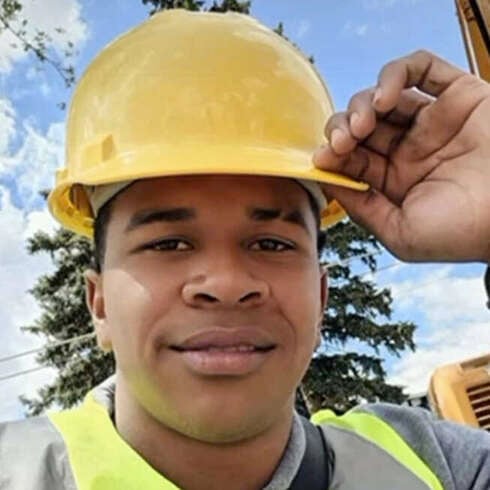
Nixon José Azuaje Pérez19 years old
As a teenager, Azuaje migrated to Peru with his family before heading to the U.S. in 2023, Jennifer Piper of the American Friends Service Committee’s Denver Immigrant Rights Program told us. The family entered with an appointment with U.S. border officials made via the CBP One app, which the Biden administration used to try to bring order to the soaring numbers of migrants attempting to enter the country. The family settled in New York City. In December of that year, Azuaje moved with his older brother to Aurora, Colorado, where he worked construction and cared for friends’ children in exchange for a place to stay.
U.S. government data we obtained lists Azuaje as having pending criminal charges. We found records showing that he and his brother were arrested for allegedly tampering with evidence in July 2024 after a shooting at their Aurora apartment complex. The brothers allegedly picked up some empty bullet casings outside their apartment and tossed them into the central courtyard, police say. The brothers told police they “had absolutely nothing to do with the shooting” and had moved the casings because they didn’t want officers to think that they were involved, records show. In a September 2024 statement, the Aurora Police Department said that the brothers were “suspected to be members” of the Tren de Aragua gang. But a department spokesperson told us that police did not find sufficient evidence that they were gang members. Azuaje pleaded not guilty to the evidence tampering charges and was awaiting trial when he was deported. His defense attorney declined to comment. His brother pleaded guilty to a misdemeanor tampering charge in May and was sentenced to 90 days in jail with credit for the time he had already served.
Methodology
The information in this database covers 238 of the Venezuelan men who were sent to CECOT, a maximum-security prison in El Salvador, on March 15, and whose names were first published by CBS News. The men were released last week and returned to Venezuela. (In total, more than 250 Venezuelan men were imprisoned and released.)
The database is part of a joint investigation by ProPublica, The Texas Tribune and the Venezuelan news outlets Alianza Rebelde Investiga (Rebel Alliance Investigates) and Cazadores de Fake News (Fake News Hunters). To confirm the deportees’ identities, we used the men’s dates of birth to search official Venezuelan government databases, including the identity card database of the Ministry of People’s Power for Interior Relations, Justice and Peace; the public database of the National Institute of Social Security; and the public database of the Venezuelan Electoral Registry. The news organizations interviewed family members of more than 100 of the Venezuelan deportees, in addition to dozens of attorneys and advocates representing the men. The interviews were conducted before the men were freed, and many were done in Spanish.
We combed social media accounts of the men and their relatives, news stories, U.S. government press releases and court documents. To determine what happened with their immigration cases, we analyzed records from the U.S. Department of Justice’s Executive Office for Immigration Review.
We also exclusively obtained data sets the government had about the men before it deported them. Those data sets included whether they had been convicted of crimes in the U.S., had pending charges or were listed solely as having immigration violations. Some information was missing about nine men. To verify and expand on that information, we then searched U.S. public records databases; reviewed police, sheriff’s department and county court websites; read through court documents; and submitted dozens of public records requests to law enforcement agencies and court systems across the country. The findings on criminal records are not comprehensive since there’s no universal database of charges or convictions.
To find criminal histories in foreign countries, we reviewed records from the official website of the Venezuelan Supreme Tribunal of Justice and consulted a global legal database. We also interviewed police officials in Peru, Chile and Colombia. In addition, we obtained three Venezuelan police databases and a January 2024 Interpol report to create a list of more than 1,400 names of alleged Venezuelan gang members, including members of Tren de Aragua. We checked that against the names of the 238 men and found no matches.
For individuals whom the Trump administration flagged as having pending criminal charges or convictions in the U.S., we attempted to reach out to their relatives and to their defense attorneys. If we got a response, we included it.
In addition, we asked the Trump administration about each of these cases. Unless it’s noted in individual entries, the administration did not respond to questions about the men.
The database reflects the ages of the men on March 15.
Additional design and development by: Zisiga Mukulu, ProPublica
Additional data reporting by: Agnel Philip, ProPublica