Visitar URL original
United Nations | Peace, dignity and equality <BR>on a healthy planet
Health

Building sustainable care and support systems

Established by the United Nations General Assembly, the International Day of Care and Support is observed annually on 29 October. This year’s theme, “Building sustainable care and support systems through decent work,” focuses on care workers and the importance of decent work. It highlights the need to address persistent gaps in labour rights, working conditions, social protection, occupational safety and health, skills development, wages, and the voice and representation of paid care workers.

The global care workforce comprises 249 million women and 132 million men.
Photo:Adobe Stock/Carlostock
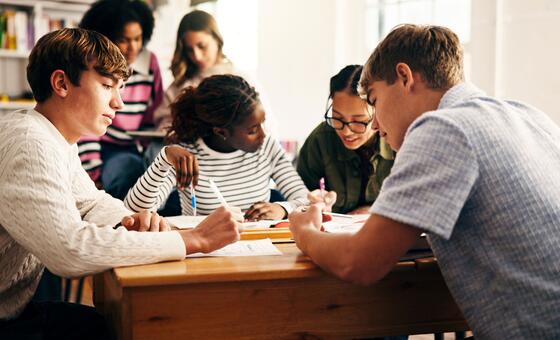
Diverse high school students sit around a wooden classroom table, writing and reviewing papers together while preparing for an exam.

AI is changing the way we think. The question is whether we’ll notice in time

29 October 2026 — Artificial intelligence promises to make life easier. With a few keystrokes, it can write emails, summarize reports, generate ideas and answer complex questions in seconds. For...

Nature is making a comeback – now restoration funding must quadruple

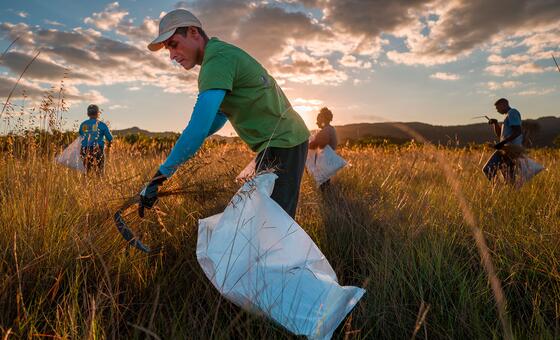
29 October 2026 — From salmon spawning grounds in Canada to coral reefs in Indonesia, ecosystems around the world are being restored at an unprecedented rate.

...

Security Council LIVE: Can new technology keep the world’s sea lanes safe?

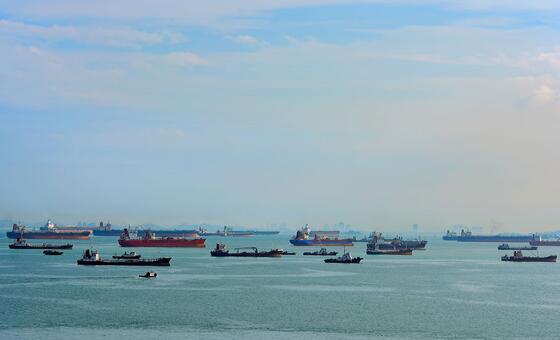
29 October 2026 — Cheap drones, autonomous vessels and cyberattacks are changing the threats to the world’s shipping lanes – and the tools to counter them. At an open debate on Thursday, the...

UN Sustainable Development Goals

17 Goals to transform our world

The Sustainable Development Goals are a call for action by all countries — poor, rich and middle-income — to promote prosperity while protecting the planet.

hands holding megaphone and speech bubble

The Goals can improve life for all of us. Cleaner air. Safer cities. Equality. Better jobs. These issues matter to everyone. But progress is too slow. We have to act, urgently, to accelerate changes that add up to better lives on a healthier planet. Find new inspiring actions on the app and at un.org/actnow.

Thomas the Tank engine

Learn more about the Sustainable Development Goals! On our student resources page you will find plenty of materials for young people and adults alike. Share with your family and friends to help achieve a better world for all.

outline of a drop over a blue background

Coming up in December! The 2026 UN Water Conference, co-hosted by the UAE and the Republic of Senegal, takes place 8 to 10 December in Abu Dhabi, United Arab Emirates. The Conference is an opportunity to strengthen investment, foster innovation, and galvanize political will to accelerate the achievement of Sustainable Development Goal 6: Clean Water and Sanitation.

SDG 15: Life on Land


Goal 15: Life on Land

Sustainably manage forests, combat desertification, halt and reverse land degradation, halt biodiversity loss

More from the
United Nations

Featured stories from across the United Nations and our world-wide family of agencies, funds, and programmes.

A view of a city, complete with factories and long columns of smoke rising from their chimneys. WMO, Pollution and Waste

The atmosphere is breaking records – and not the kind we want

The planet is carrying an ever-heavier burden of heat-trapping gases. A new report from the World Meteorological Organization (WMO) reveals that carbon dioxide, methane and nitrous oxide reached record atmospheric levels in 2025, accelerating global warming and fuelling extreme weather. With carbon dioxide lingering for centuries, today's emissions will shape the climate for generations. As countries prepare for the UN Climate Conference in November (COP 31), the findings underscore the urgency of turning climate promises into action.

Three women, one of them carrying a child on her arms, arriving at a refugee camp in Austria following the violent suppression of the Hungarian uprising in November 1956. UNHCR, Displaced Persons and Refugees

When the world opened its doors

Seventy years ago, thousands of Hungarians fled their homeland with little more than hope for a safer future. Following the Soviet suppression of the 1956 uprising, some 200,000 people sought refuge abroad, sparking an extraordinary international response. Countries opened their borders, communities offered shelter, and the UN Refugee Agency (UNHCR) helped families rebuild their lives. Their stories reveal how compassion and collective action transformed a humanitarian crisis into new beginnings. Today, as millions remain displaced, the lessons of 1956 are more relevant than ever.

A woman on her knees working the soil in a vegetable garden. FAO, Agriculture and Food

From farm waste to fertile ground

What once went up in smoke is now bringing new life to the soil. In western Georgia, farmer Nana Nikuradze is turning crop leftovers into natural fertilizer, reducing waste and growing healthier food for her family and community. Through training supported by the Food and Agriculture Organization (FAO), she has embraced composting and environmentally friendly farming methods that protect beneficial insects and reduce reliance on chemicals. Her journey shows how simple changes can nurture healthier soils, strengthen rural livelihoods and turn yesterday’s waste into tomorrow’s harvest.

Migration, IOM

A home to call her own

After nearly a decade away, a woman returns to Burundi and begins rebuilding her life with help from the International Organization for Migration (IOM).

Human Rights

We want freedom, and we want bread

South African human rights defender Albie Sachs reflects on how the United Nations human rights Covenants unite civil, political, economic, social and cultural rights in the pursuit of freedom and dignity.

Economic Development, UNCTAD

World Investment Forum seeks to unlock capital for development

Risk-sharing proposal, AI investment tools, policy reforms and new partnerships aim to bring more capital to developing economies as investment projects decline.

Food Aid, WFP

School meals, solar pumps and sewing

How a far-reaching WFP pilot is linking school meals, agriculture and livelihoods to strengthen food security.

What we do

Due to the powers vested in its Charter and its unique international character, the United Nations can take action on the issues confronting humanity in the 21st century, including:

Structure of the
United Nations

The main parts of the UN structure are the General Assembly, the
Security Council, the Economic and Social Council, the Trusteeship Council, the International Court of Justice, and the UN Secretariat. All were established in 1945 when the UN was founded.

The General Assembly is the main deliberative, policymaking and representative organ of the UN. All 193 Member States of the UN are represented in the General Assembly, making it the only UN body with universal representation.

The Security Council has primary responsibility, under the UN Charter, for the maintenance of international peace and security. It has 15 Members (5 permanent and 10 non-permanent members). Each Member has one vote. Under the Charter, all Member States are obligated to comply with Council decisions.

The Economic and Social Council is the principal body for coordination, policy review, policy dialogue and recommendations on economic, social and environmental issues, as well as implementation of internationally agreed development goals.

The Trusteeship Council was established in 1945 by the UN Charter, under Chapter XIII, to provide international supervision for 11 Trust Territories that had been placed under the administration of seven Member States, and ensure that adequate steps were taken to prepare the Territories for self-government and independence.

The International Court of Justice is the principal judicial organ of the United Nations. Its seat is at the Peace Palace in the Hague (Netherlands). It is the only one of the six principal organs of the United Nations not located in New York (United States of America).

The Secretariat comprises the Secretary-General and tens of thousands of international UN staff members who carry out the day-to-day work of the UN as mandated by the General Assembly and the Organization's other principal organs.

Learn more

Podium of the General Assembly Hall seen from below with the gold wall and the golden UN logo behind

The United Nations process to appoint the next Secretary‑General continues with interactive dialogues guided by the principles of transparency and inclusivity. Watch the dialogues: Lana Zaki Nusseibeh (27 October), Ivonne A-Baki (20 August), Michelle Bachelet Jeria (21 April), María Fernanda Espinosa Garcés (15 June), Rafael Mariano Grossi (21 April), Rebeca Grynspan Mayufis (22 April), Olara Otunnu (19 August), Carolyn Rodrigues Birkett (18 June) and Macky Sall (22 April).


A group of people carrying their few belongings, walking in front of buildings in ruins, at sunset.

This series shines a light on communities facing conflict, displacement, public health emergencies and other humanitarian challenges around the world. Drawing on reporting from across the UN system, it amplifies voices from countries including Haiti, Gaza, DR Congo, Yemen, Afghanistan and Myanmar, to foster understanding, encourage engagement, and help mobilize support, assistance, and protection for the most vulnerable people.

Climate Change is one of the defining issues of our time and we are at a pivotal moment. From shifting weather patterns that threaten food production, to rising sea levels that increase the risk of catastrophic flooding, the impacts of climate change are global in scope and unprecedented in scale. Taking decisive action today will make adapting to these impacts in the future more effective and less costly.

General Assembly hall with the Secretary-General at the podium

The United Nations is the only place on Earth where all the world's nations come together to discuss common problems and find shared solutions that benefit all of humanity. Learn about the main areas of the UN’s activities; how it makes a difference to the world’s people; and how every citizen can get involved and make a contribution. 

Did you know?

As the world’s only truly universal global organization, the United Nations has become the foremost forum to address issues that transcend national boundaries and cannot be resolved by any one country acting alone.

Watch and Listen

Video and audio from across the United Nations and our world-wide family of agencies, funds, and programmes.

What happens when the tapes and films that hold our history can no longer be played? At the New York Public Library’s Audio and Moving Image Preservation Lab, specialists are working to preserve the sounds and images of the past—transferring obsolete film, audio and video formats into digital form so they can be accessed by people today and preserved for the future. In this behind-the-scenes look at the lab, discover why audiovisual preservation matters, how fragile and outdated media can be brought back to life, and what might be lost if this work were never done. As one archivist puts it, the work is like operating a time machine: going back into the past, retrieving its recordings and making them available to people today. Because preserving our past is essential to understanding our future.

Behind every ordinary day

The absence of catastrophe is no accident. It is the result of decades of often unseen work to reduce risks before they become crises. This Disarmament Week, we bring those risks into view and highlight the cooperation and action that can help move us forward.

International Decade of Sciences for Sustainable Development

The International Decade of Sciences for Sustainable Development (2024–2033) is a global movement proclaimed by the United Nations General Assembly and led by UNESCO. It harnesses the power of science to foster inclusive and transformative solutions for people and the planet.

UN Podcasts

WIPO podcast

Beyond patents: Turning ideas into business value

What makes an invention truly valuable – the patent that protects it or the strategy behind it? In this episode of the WIPO’s Page Points podcast, Farnaz Massoumian, author of Intellectual Property Strategy: In-house Perspectives, explores how businesses can turn innovation into competitive advantage. From choosing between patents and trade secrets to uncovering overlooked inventions, she explains why successful intellectual property strategies go beyond legal protection, connecting technology, business goals and human creativity.

Latest Audio from UN News

The United Nations in Pictures

Images from across the United Nations and our world-wide family of agencies, funds, and programmes.

Aerial view of a wetland in Bosnia and Herzegovina.
Photo:Vladan Jeftović /UNDP in BiH

When nature heals, communities thrive

What if the best defence against climate change is nature itself? In Bosnia and Herzegovina, wetlands that once sustained wildlife and village life are disappearing as water levels fall and habitats deteriorate. Now, a UN Development Programme (UNDP) initiative is helping restore two precious ecosystems, Tišina and Gromiželj, bringing hope for rare species, healthier waterways and more resilient communities. By combining local knowledge with science, the project shows how restoring nature can protect livelihoods, reduce climate risks and preserve a living heritage for future generations.

In a dark apartment lit only by a flashlight, a woman holds her daughter in her arms.
Photo:UN Women/Olha Ivashchenko

Women are fighting for peace, but who is listening?

As wars grow deadlier, women and girls are paying an increasingly devastating price. Sexual violence is surging, emerging technologies are intensifying threats, and millions face displacement, poverty and hunger. Yet women remain largely excluded from decisions about peace, representing just five per cent of negotiators in 2025. From mediating disputes to protecting survivors and rebuilding communities, women are already leading efforts to prevent violence and restore stability. UN Women calls for greater protection, meaningful participation and investment in women-led peacebuilding to create lasting peace.