


Hello, world. My name's Stephen LaConte, and this is Stephen Please — an advice column where readers like you can send me your problems, and I tell you exactly what to do.

If you enjoy the column below, please subscribe to my newsletter! You'll get each new issue in your inbox for free. I love having new email friends.
And if you've got a problem you'd like me to solve, send it in via my anonymous form. Let's open some letters!

Dear Stephen,
My best friend has a longtime close friend who isn't part of our core friend group but gets invited to events with us (we’re a rave crew with an open-invite dynamic). We see her a handful of times a year. She has become friendly with my partner because they have some common niche interests.
At a recent event, she pulled me aside multiple times to tell me she’s not interested in my partner, with increasing intensity. I genuinely have zero concerns about this. I reassured her of that every time. I told her I trust him implicitly, he has many female friends, and I love that about him. After the fourth time, I told her, “We’ve been together for six years.” Her response was, “Well, sometimes that is not enough.” Whatever her meaning or implication, it felt rude. I tried to avoid her the rest of the night but she continued to act weirdly towards me.
Everyone is frustrated about what happened, including my best friend and my partner. My nervous system is really set off thinking about seeing her at events, but I don’t want to create a divide amongst our peers. What should I do?
—Reeling Raver

Dear Reeling Raver,
There’s not much for you to do, but your best friend and your partner both have a task on their plate. Maybe send this column to them!
Your partner’s task: He should put some serious distance between himself and this woman. Who the hell knows why she acted the way she did. Maybe she’s got feelings for him, maybe she was under the influence, maybe it was a combination of the two. I think some commenters will tell you to be suspicious of your partner’s role in all this. FWIW, I don’t think anything in your letter indicates shady behavior on his end, but what he does next will tell you a lot.
Your friend’s task: She should stop inviting this person to your group gatherings. Even an open-invite policy comes with the obvious asterisk that you don’t bring people who act inappropriately and make your friends uncomfortable. This is true in all situations, but especially ones where (I’m assuming!) substances are being taken and collective trust is vital.
I don’t think either of these steps should cause a divide within your group, assuming the group knows what happened that night. If they don’t know, tell them! It’s a perfectly reasonable explanation for why you aren’t comfortable hanging out with this person moving forward. And frankly — are advice columnists allowed to say this? — it’s good gossip.

Dear Stephen,
I currently work for a finance company. My direct manager (I’m the assistant manager) is great. She confided in me recently that she is working on becoming a mom. Although I am filled with nothing but excitement for her, I’m a bit conflicted because I want to leave the company. I currently do a vast majority of the workload here and I’ve been having thoughts about getting a new job. However, the staff is very, very small. If my manager has a baby and goes on maternity leave, it’ll just be me and one other person holding down the fort until her return.
I genuinely do not want to wait that long as I’m a bit afraid I might reach my breaking point before that happens. But at the same time, I do not want to be the reason she has to put her goals on hold nor be the reason for any added stress on her during a pregnancy. What should I do?
—Wanting Out

Dear Wanting Out,
Pretend she never told you her plans and proceed with your own. Neither of you should put your life on hold for the other. If her maternity leave overlaps with your departure, that’s your company’s problem to solve. Your team might be small, but unless one of you owns the company, there has to be someone above all of you whose job it is to figure this out. Let them!
My reasoning here is half principled, half practical. First the principled: Companies are not exactly known for showing undying loyalty to their workers. When they do layoffs, they don’t wait until it’s a convenient time for the employee to lose their job. If they can dump you at any time, the reverse must also be true.
And then there’s the practical side of this: You and your coworker couldn’t plan around each other even if you tried. You have no clue when she’ll actually get pregnant — maybe it’s next week, maybe it’s two years from now. And you can’t predict how long it will take for you to find your next job. It can be a long road. When the right offer comes, you just have to take it.
If you do end up quitting right before or during your manager’s maternity leave, there are things you can do to protect her peace. Give sufficient notice, offer to help find your replacement, and insist that the boundaries of her leave are respected. These are your only obligations.
DRAWING BREAK!
Speaking of job hunting, here’s a drawing by me:
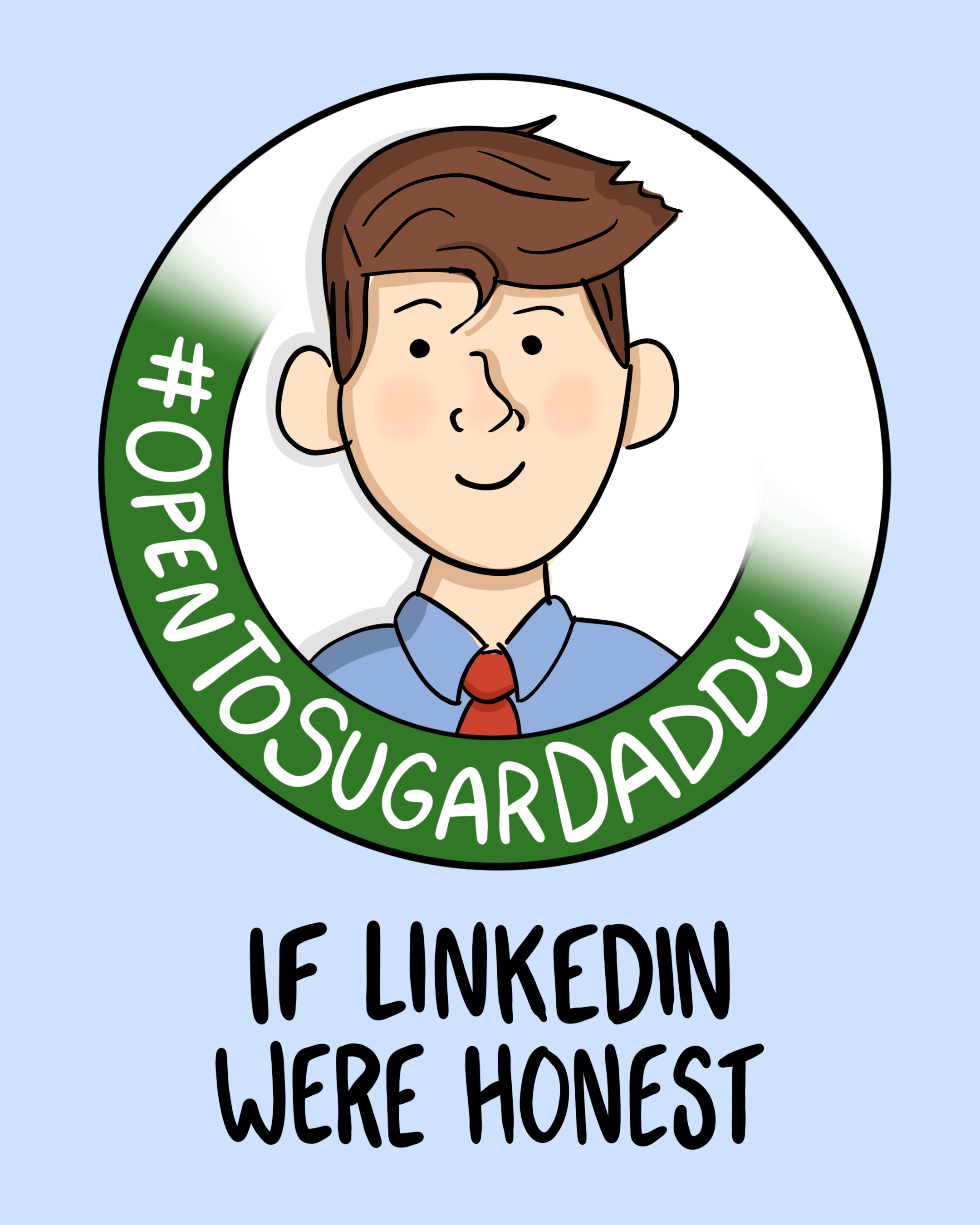
This drawing may or may not be semi-autobiographical. Back to the advice!
Dear Stephen,
I’m worried my best friend doesn’t like my partner because of his religious convictions. I’ve been with him for a year and we’re incredibly happy together. He’s kind, smart, patient, and funny. My friends all seem to like him, but my best friend often seems frosty about him.
The main source of the tension seems to be around religion. My partner and I are both practicing Catholics. I was brought up Catholic and have been part of a Catholic parish ever since my friend has known me, but through my boyfriend I’ve gotten more involved, which has made me really happy. We’re not intense about it and would never try to persuade other people to come to church with us or anything, but my friend is an atheist and seems to find all of this very uncomfortable.
The main source of the tension seems to be around religion. My partner and I are both practicing Catholics. I was brought up Catholic and have been part of a Catholic parish ever since my friend has known me, but through my boyfriend I’ve gotten more involved, which has made me really happy. We’re not intense about it and would never try to persuade other people to come to church with us or anything, but my friend is an atheist and seems to find all of this very uncomfortable.
—Friend Of Faith

Dear Friend Of Faith,
For context, I’m coming at this as a former Catholic kid myself — did the kneeling, ate the wafers, even got confirmed. My breakup with the church was mutual. I didn’t like their views on a variety of social issues, and they didn’t like my views on hot men. But I know Catholicism well and have seen firsthand that faith of any kind can do good things for people.
But it doesn’t do good for everyone, of course, and I’d guess that’s the root of your friend’s concern here. She may worry, for example, that your boyfriend’s devoutness will cause you to take on bigoted views, or fight against reproductive rights, or worst of all, become a butter-churning tradwife on TikTok.
So here’s my question to you: Even if you and this friend don’t have the same beliefs, do you have the same core values? Do you care about the same issues? Do you want to live in the same kind of world?
If the answer is yes, then I think that’s a worthwhile conversation for you two to have, especially as your religious practice deepens. Tell her about the parts of the faith that you find most meaningful — and just as importantly, the parts you don’t align with. It might be a comfort for her to hear that you’re thinking critically about this stuff, and not blindly accepting whatever beliefs a boyfriend, priest, or ancient text may offer you.
And then, after what is hopefully one very productive chat about faith, I would avoid trying to have several more. Humanity has had a few thousand years to get on the same page about religion, but so far no dice. So long as you can each respect the other’s point of view, it’s probably best to focus on more secular topics, like Love Island. Good luck.
This is the part of the advice column where my pen runs out of ink. But before you go, I hope you'll subscribe to my newsletter! You'll get each new issue of Stephen Please directly in your inbox, and it's completely free.

Comments