- NEWS AND VIEWS
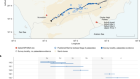
Tethered to stone: how rock and water availability shaped early desert occupation
Access options
Access Nature and 54 other Nature Portfolio journals
Get Nature+, our best-value online-access subscription
Subscribe to this journal
Receive 51 print issues and online access
Rent or buy this article
Prices vary by article type
Prices may be subject to local taxes which are calculated during checkout
doi: https://doi.org/10.1038/d41586-026-03263-0
References
Dellmour, R. W. et al. Nature https://doi.org/10.1038/s41586-026-11180-5 (2026).
Matter, A. et al. Quat. Int. 382, 120–131 (2015).
Rose, J. I. et al. PLoS ONE 6, e28239 (2011).
Groucutt, H. S. et al. Quat. Sci. Rev. 119, 116–135 (2015).
Hallinan, E. & Shaw, M. PLoS ONE 15, e0241068 (2020).
Nash, D. J. et al. J. Hum. Evol. 96, 113–133 (2016).
Foley, R. A. & Lahr, M. M. PLoS ONE 10, e0116482 (2015).
Rose, J. I. et al. J. Paleolit. Archaeol. 8, 40 (2025).
Scerri, E. M. L. et al. Sci. Rep. 8, 17165 (2018).
Groucutt, H. S. et al. Nature 597, 376–380 (2021).
Roberts, P. & Stewart, B. A. Nature Hum. Behav. 2, 542–550 (2018).
Competing Interests
The author declares no competing interests.
 Why did ancient humans avoid this lush paradise
 Ancient DNA illuminates how humans travelled and interacted in Stone Age Africa
 Tool technology older than previously thought
 Evidence of early human migration and tool-making challenges assumptions about evolution