Latest research

  1. Article

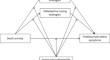
    Shared and Potentially Distinct Features of Inhibitory Control and Metacognitive Beliefs in Adolescents with Trichotillomania and Non-Suicidal Self-Injury: A Case-Control Study

    • Duygu Kinay Ermis
    • Efruz Pirdoğan Aydın
    • Sena Namlı

    Trichotillomania (TTM) and non-suicidal self-injury (NSSI) share negative affect and emotional dysregulation but differ in intentionality, motivation, and phenomenology, and their classification remains debated. Comparative neurocognitive evidence...

    28 October 2026
  2. Article

    Emotion regulation capacity lacks a shared neural signature

    • Maurizio Sicorello
    • Jenny Zaehringer
    • Carmen Morawetz
    in Nature

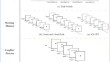
    Cognitive reappraisal refers to changing how one thinks about a situation to alter its emotional impact. It is central to well-being 1 and engages prefrontal regulatory circuits 2 , prompting the assumption that their activity reflects a person’s...

    28 October 2026 Open access
  3. Article

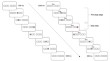
    Reliability-based arbitration reveals heterogeneous model-based and model-free reinforcement learning strategies linked to compulsivity and impulsivity

    • Jeffrey Cockburn
    • Weilun Ding
    • John P. O’Doherty

    The mechanisms by which humans arbitrate between reinforcement-learning strategies remain poorly understood, and the nature of these strategies has come under recent debate. Using a modified two-step decision task in two independent samples (N= 452...

    24 October 2026 Open access
  4. Article

    Effects of a cognitive training program on cancer-related cognitive impairment in breast cancer patients in active treatment: a randomized controlled trial

    • Juan Luis Sánchez-González
    • Samuel Jiménez-Sánchez
    • Eduardo José Fernández-Rodríguez

    Cancer-related cognitive impairment (CRCI) is a frequent and distressing complication in women undergoing active treatment for breast cancer. Although cognitive training has shown promise as a non-pharmacological strategy, evidence on ecologically...

    23 October 2026 Open access
  5. Article

    Active versus control Gaze-Contingent Music Reward Therapy (GCMRT) augmentation of cognitive behavioral therapy in the treatment of pediatric anxiety: protocol for a double-blind randomized controlled trial

    • Meghan E. Byrne
    • Marta Korom
    • Daniel S. Pine

    Background Threat-related attention bias is an established correlate of anxiety disorders. Gaze-Contingent Music Reward Therapy (GCMRT), an eye-tracking based treatment, involves a music-based positive reinforcement training regimen of eye-gaze...

    22 October 2026 Open access
  6. Article

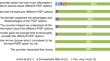
    “I Feel Like I Am a Winner:” High Levels of Autonomous Decision-Making Among Women Receiving HIV Pre-Exposure Prophylaxis (PrEP) Choice Counselling in Sub-Saharan Africa

    • Ivan Segawa
    • Haley Sisel
    • Virginia Fonner

    As pre-exposure prophylaxis (PrEP) options expand, providers play a critical role in supporting clients to select the method that best meets their needs. We examined how client–provider interactions during PrEP choice counselling influenced women’s...

    22 October 2026 Open access
View all research