
content
Also found in: Thesaurus, Medical, Acronyms, Idioms, Encyclopedia, Wikipedia.
con·tent 1
(kŏn′tĕnt′)con·tent 2
(kən-tĕnt′)content
(ˈkɒntɛnt)content
(kənˈtɛnt)con•tent1
(ˈkɒn tɛnt)n.
con•tent2
(kənˈtɛnt)adj.
content
Content can be a noun, an adjective, or a verb. When it is a noun, it is pronounced /'kɒntent/. When it is an adjective or verb, it is pronounced /kən'tent/.
The contents /'kɒntents/ of something such as a box or room are the things inside it.
Be Careful!
Contents is a plural noun. Don't talk about 'a content'.
The contents of something such as a document or tape are the things written in it or recorded on it.
The content of something such as a speech, piece of writing, website, or television programme is the information it gives, or the ideas or opinions expressed in it.
If you are content /kən'tent/ to do something or are content with something, you are willing to do it, have it, or accept it.
If you are content, you are happy and satisfied. You use this meaning of content after a linking verb. Don't use it in front of a noun.
You can also use contented /kən'tentɪd/ to say that someone is happy and satisfied. Contented can be used in front of a noun or after a linking verb.
If you content /kən'tent/ yourself with doing something, you are satisfied with it and don't try to do other things.
content
Past participle: contented
Gerund: contenting
| Imperative |
|---|
| content |
| content |
| Noun | 1. |  content - everything that is included in a collection and that is held or included in something; "he emptied the contents of his pockets"; "the two groups were similar in content" aggregation, collection, accumulation, assemblage - several things grouped together or considered as a whole |
| 2. | content - what a communication that is about something is about communication - something that is communicated by or to or between people or groups body - the central message of a communication; "the body of the message was short" corker - (dated slang) a remarkable or excellent thing or person; "that story was a corker" reminder - a message that helps you remember something; "he ignored his wife's reminders" petition, request, postulation - a formal message requesting something that is submitted to an authority memorial - a written statement of facts submitted in conjunction with a petition to an authority latent content - (psychoanalysis) hidden meaning of a fantasy or dream subject, theme, topic - the subject matter of a conversation or discussion; "he didn't want to discuss that subject"; "it was a very sensitive topic"; "his letters were always on the theme of love" meaning, signification, import, significance - the message that is intended or expressed or signified; "what is the meaning of this sentence"; "the significance of a red traffic light"; "the signification of Chinese characters"; "the import of his announcement was ambiguous" acknowledgement, acknowledgment - a statement acknowledging something or someone; "she must have seen him but she gave no sign of acknowledgment"; "the preface contained an acknowledgment of those who had helped her" refusal - a message refusing to accept something that is offered info, information - a message received and understood counseling, counselling, guidance, counsel, direction - something that provides direction or advice as to a decision or course of action dedication, commitment - a message that makes a pledge commendation, approval - a message expressing a favorable opinion; "words of approval seldom passed his lips" disapproval - the expression of disapproval respects - (often used with `pay') a formal expression of esteem; "he paid his respects to the mayor" discourtesy, disrespect - an expression of lack of respect insertion, interpolation - a message (spoken or written) that is introduced or inserted; "with the help of his friend's interpolations his story was eventually told"; "with many insertions in the margins" statement - a message that is stated or declared; a communication (oral or written) setting forth particulars or facts etc; "according to his statement he was in London on that day" statement - a nonverbal message; "a Cadillac makes a statement about who you are"; "his tantrums are a statement of his need for attention" humor, wit, witticism, wittiness, humour - a message whose ingenuity or verbal skill or incongruity has the power to evoke laughter opinion, view - a message expressing a belief about something; the expression of a belief that is held with confidence but not substantiated by positive knowledge or proof; "his opinions appeared frequently on the editorial page" instruction, direction - a message describing how something is to be done; "he gave directions faster than she could follow them" proposal - something proposed (such as a plan or assumption) offering, offer - something offered (as a proposal or bid); "noteworthy new offerings for investors included several index funds" submission, entry - something (manuscripts or architectural plans and models or estimates or works of art of all genres etc.) submitted for the judgment of others (as in a competition); "several of his submissions were rejected by publishers"; "what was the date of submission of your proposal?" narration, narrative, story, tale - a message that tells the particulars of an act or occurrence or course of events; presented in writing or drama or cinema or as a radio or television program; "his narrative was interesting"; "Disney's stories entertain adults as well as children" promotion, promotional material, publicity, packaging - a message issued in behalf of some product or cause or idea or person or institution; "the packaging of new ideas" sensationalism - subject matter that is calculated to excite and please vulgar tastes shocker - a sensational message (in a film or play or novel) | |
| 3. | content - the proportion of a substance that is contained in a mixture or alloy etc. proportion - the quotient obtained when the magnitude of a part is divided by the magnitude of the whole | |
| 4. | content - the amount that can be contained; "the gas tank has a capacity of 12 gallons" volume - the amount of 3-dimensional space occupied by an object; "the gas expanded to twice its original volume" vital capacity - the maximum amount of air that can be exhaled after a maximum inhalation (usually tested with a spirometer); used to determine the condition of lung tissue | |
| 5. | 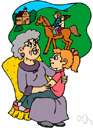 content - the sum or range of what has been perceived, discovered, or learned tradition - an inherited pattern of thought or action object - the focus of cognitions or feelings; "objects of thought"; "the object of my affection" food for thought, intellectual nourishment, food - anything that provides mental stimulus for thinking noumenon, thing-in-itself - the intellectual conception of a thing as it is in itself, not as it is known through perception universe of discourse, universe - everything stated or assumed in a given discussion matter, topic, issue, subject - some situation or event that is thought about; "he kept drifting off the topic"; "he had been thinking about the subject for several years"; "it is a matter for the police" issue - an important question that is in dispute and must be settled; "the issue could be settled by requiring public education for everyone"; "politicians never discuss the real issues" idea, thought - the content of cognition; the main thing you are thinking about; "it was not a good idea"; "the thought never entered my mind" essence, heart and soul, inwardness, nitty-gritty, pith, substance, gist, kernel, nub, meat, core, sum, marrow, heart, center, centre - the choicest or most essential or most vital part of some idea or experience; "the gist of the prosecutor's argument"; "the heart and soul of the Republican Party"; "the nub of the story" wisdom - accumulated knowledge or erudition or enlightenment internal representation, mental representation, representation - a presentation to the mind in the form of an idea or image belief - any cognitive content held as true heresy, unorthodoxy - a belief that rejects the orthodox tenets of a religion goal, end - the state of affairs that a plan is intended to achieve and that (when achieved) terminates behavior intended to achieve it; "the ends justify the means" education - knowledge acquired by learning and instruction; "it was clear that he had a very broad education" experience - the content of direct observation or participation in an event; "he had a religious experience"; "he recalled the experience vividly" acculturation, culture - all the knowledge and values shared by a society lore, traditional knowledge - knowledge gained through tradition or anecdote; "early peoples passed on plant and animal lore through legend" ignorance - the lack of knowledge or education metaknowledge - knowledge about knowledge | |
| 6. | content - the state of being contented with your situation in life; "he relaxed in sleepy contentedness"; "they could read to their heart's content" acceptance - the state of being acceptable and accepted; "torn jeans received no acceptance at the country club" | |
| 7. | content - something (a person or object or scene) selected by an artist or photographer for graphic representation; "a moving picture of a train is more dramatic than a still picture of the same subject" thing - a separate and self-contained entity | |
| Verb | 1. | content - satisfy in a limited way; "He contented himself with one glass of beer per day" |
| 2. | content - make content; "I am contented" discontent - make dissatisfied | |
| Adj. | 1. | content - satisfied or showing satisfaction with things as they are; "a contented smile" happy - enjoying or showing or marked by joy or pleasure; "a happy smile"; "spent many happy days on the beach"; "a happy marriage" pleased - experiencing or manifesting pleasure |
content
1content
2content
adjectiveverbcontent
1 [kənˈtent]he is content to watch → se conforma or se contenta con mirar
to one's heart's content → hasta hartarse, a más no poder
you can complain to your heart's content → protesta cuanto quieras
to content o.s. with sth/with doing sth → contentarse or darse por contento con algo/con hacer algo
content
2 [ˈkɒntent] Ncontent
[kənˈtɛnt]She is not content with these explanations → Ces explications ne lui suffisent pas.
to content o.s. with sth → se contenter de qch
to content o.s. with doing sth → se contenter de faire qch
content
1content
2content
1 [kənˈtɛnt]to be content to do sth → essere contento/a di fare qc
to one's heart's content → quanto si ha voglia
to eat and drink to one's heart content → mangiare e bere a sazietà
to content o.s. with sth/with doing sth → accontentarsi di qc/di fare qc
content
2 [ˈkɒntɛnt] n → contenuto contents npl (of box, case) → contenuto(table of) contents (of book) → indice m